 SSC Ultimate Aero Hatchback
 Cool SSC Ultimate Aero
 Sporty SSC Ultimate Aero
 White SSC Ultimate Aero
 SSC Ultimate Aero View Detail
 Elegant SSC Ultimate Aero
 Red SSC Ultimate Aero
 SSC Ultimate Aero Inside
 SSC Ultimate Aero Engine DetailSSC Ultimate Aero HatchbackCool SSC Ultimate AeroSporty SSC Ultimate AeroWhite SSC Ultimate AeroSSC Ultimate Aero View DetailElegant SSC Ultimate AeroRed SSC Ultimate AeroSSC Ultimate Aero InsideSSC Ultimate Aero Engine Detail
 The Bugatti Veyron EB 16.4 is a rear mid-engined Supercar. The Super Sport version is the fastest road-legal car in the world, with a top speed of 431.07 km/h (267.85 mph). The original version has a top speed of 408.00 km/h (253.52 mph). Designed and developed by the German Volkswagen Group and produced by Bugatti Automobiles SAS at their headquarters in Château St. Jean in Molsheim (Alsace, France), the Veyron's chief designer was Hartmut Warkuss, and the exterior was designed by Jozef Kabaň of Volkswagen, with much of the engineering work being conducted under the guidance of former Peterbilt engineer and now Bugatti Engineering chief Wolfgang Schreiber. The car is named after French racing driver Pierre Veyron, who won the 24 hours of Le Mans in 1939 while racing for the original Bugatti company. It was named Car of the Decade (2000–2009) by the BBC television programme Top Gear. A number of special variants have been produced, including two targa tops. In December 2010, Bugatti began offering prospective buyers the ability to customize exterior and interiors colors by using the Veyron 16.4 Configurator application on the marque's official website.
 The top speed of the original version was verified by James May on Top Gear in November 2006, again at Volkswagen Group's private Ehra-Lessien test track. Jeremy Clarkson, driving a Veyron from Italy to London, noted that at top speed the engine consumes 45,000 litres (9,900 imp gal) of air per minute (as much as a human breathes in four days). The Veyron has the fastest top speed of any street legal production car. Once back in the Top Gear studio, James was asked by co-presenter Jeremy Clarkson what the Veyron felt like to drive at 407 km/h (253 mph), May replied that it was "totally undramatic", and very stable at speed. It only wobbled slightly as the air brake moved in the vertical position to slow the car down at lower speeds. A chrome Veyron in the UK German inspection officials recorded an average top speed of 408.47 km/h (253.81 mph)[5] during test sessions on the Ehra-Lessien test track on 19 April 2005. On 4 July 2010, Bugatti's official test driver Pierre Henri Raphanel piloted the Super Sport edition and was clocked at an average of 431.072 km/h (267.856 mph) on the same track, taking back the title from the SSC Ultimate Aero TT as the fastest production vehicle of all time. The 431.072 km/h mark was reached by averaging the Super Sport's two test runs, the first topping out at 427.93 km/h (265.90 mph) and the second at 434.20 km/h (269.80 mph). The record run was certified by the German government and the Guinness Book of World Records.
 Bugatti veyron endowed with W16 engine-16 cylinders in 4 banks of 4 cylinders fed by four turbochargers, a dual-clutch DSG computer-controlled manual transmission, the Veyron has a length is 4462 mm (175.8 in) a wide of 1998 mm (78.7 in) and hight of 1206 mm (47.5 in). Counting a sum of 10 radiators, for the engine cooling system, for transmission oil, a heat exchanger for the air to liquid intercoolers, for engine oil etc., the car has a power to weight ratio of 529 bhp/tonne . It has the fastest acceleration speed, reaching 60 mph in 2.6 seconds.
 The Veyron's brakes use cross drilled, radially vented carbon fibre reinforced silicon carbide (C/SiC) composite discs, manufactured by SGL Carbon, which have a much greater resistance to brake fade when compared with conventional cast iron discs. The lightweight aluminium alloy monobloc brake calipers are made by AP Racing; the fronts have eight titanium pistons and the rear calipers have six pistons. Bugatti claims maximum deceleration of 1.3 g on road tires. As an added safety feature, in the event of brake failure, an anti-lock braking system (ABS) has also been installed on the handbrake. Prototypes have been subjected to repeated 1.0 g braking from 312 km/h (194 mph) to 80 km/h (50 mph) without fade. With the car's acceleration from 80 km/h (50 mph) to 312 km/h (194 mph), that test can be performed every 22 seconds. At speeds above 200 km/h (120 mph), the rear wing also acts as an airbrake, snapping to a 55° angle in 0.4 seconds once brakes are applied, providing an additional 0.68 g (6.66 m/s2) of deceleration (equivalent to the stopping power of an ordinary hatchback).[9] Bugatti claims the Veyron will brake from 400 km/h (250 mph) to a standstill in less than 10 seconds, though distance covered in this time will be half of a kilometer (third of a mile).
 Every once in a while you come across something that is so luxuriously superior and elegantly sexy that you can’t keep you mind off of it. I’m referring to something that is so extravagantly beautiful and dynamically robust that it deserves all of the hype that surrounds it. I’m talking about a car that has been described as “the fastest most powerful and most expensive road car the world has ever seen”. If you still don’t know what I’m talking about then allow me to introduce you to a super sportscar which has been praised as “the greatest automobile ever made”, the Bugatti Veyron. Before you continue onwards I should mention that if your financial standing is not approaching “island buying” status then the only relationship you will ever have with this car is the same type the deaf have with music, none whatsoever. With that being said I would recommend that you STOP! reading NOW because the Veyron is so painfully untouchable that it’s completely pointless teasing yourself any further.
 The Veyron Super Sport features an engine power increase from the standard 1,001 metric horsepower (736 kW; 987 bhp) to 1,200 metric horsepower (883 kW; 1,184 bhp) and torque of 1,500 N·m (1,100 ft·lbf) and a revised aerodynamic package. It was shown publicly for the first time at the Pebble Beach Concours d'Elegance in August 2010. Bugatti's official test driver Pierre Henri Raphanel drove the Super Sport version of the Veyron on Volkswagen's Ehra-Lessien high-speed oval to establish the car's top speed. With representatives of the Guinness Book of Records and German Technical Inspection Agency (TÜV) on hand, Raphanel made passes around the big oval in both directions achieving an average maximum speed of 431.072 km/h (267.856 mph). Once produced for sale, the first five Super Sports will sport the same black and orange finish as the first production car, which was used to set the speed record, and all production models will be electronically limited to 415 km/h (258 mph) to protect the tyres.
 The Bugatti Veyron EB 16.4 is a mid-engine grand tourer developed by the German car-manufacturer Volkswagen and produced by the Volkswagen-brand Bugatti Automobiles SAS at their headquarters in Château St Jean in Molsheim (Alsace, France), and whose production and development is often credited to Ferdinand Karl Piech. It is named after French racing driver Pierre Veyron, who won the 24 hours of Le Mans in 1939 while racing for the original Bugatti company. The Veyron features an 8.0 litre W16 engine — 16 cylinders in two banks of eight cylinders, or the equivalent of two narrow-angle V8 engines mated in a “W” configuration. Each cylinder has four valves for a total of 64, but the narrow staggered 8 configuration allows two overhead camshafts to drive two banks of cylinders so only four camshafts are needed. The engine is fed by four turbochargers and displaces 487.8 cu in. with a 3.4 in × 3.4 in bore and stroke.
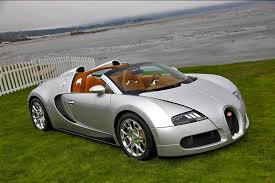 A targa top version unveiled at Pebble Beach Concours d'Elegance on 15 August 2008, with production beginning in spring 2009. The model has extensive reinforcements to compensate for the lack of standard roof, and small changes to the windshield and running lights. There are two removable tops, the second a temporary roof fashioned after an umbrella. The top speed with the hardtop in place is the same as the standard coupé version, but with the roof down is limited to 369 km/h (229 mph)—and to 130 km/h (81 mph) with the temporary soft roof. The first (chassis 001) was sold at auction, raising approximately $900,000 for charity.


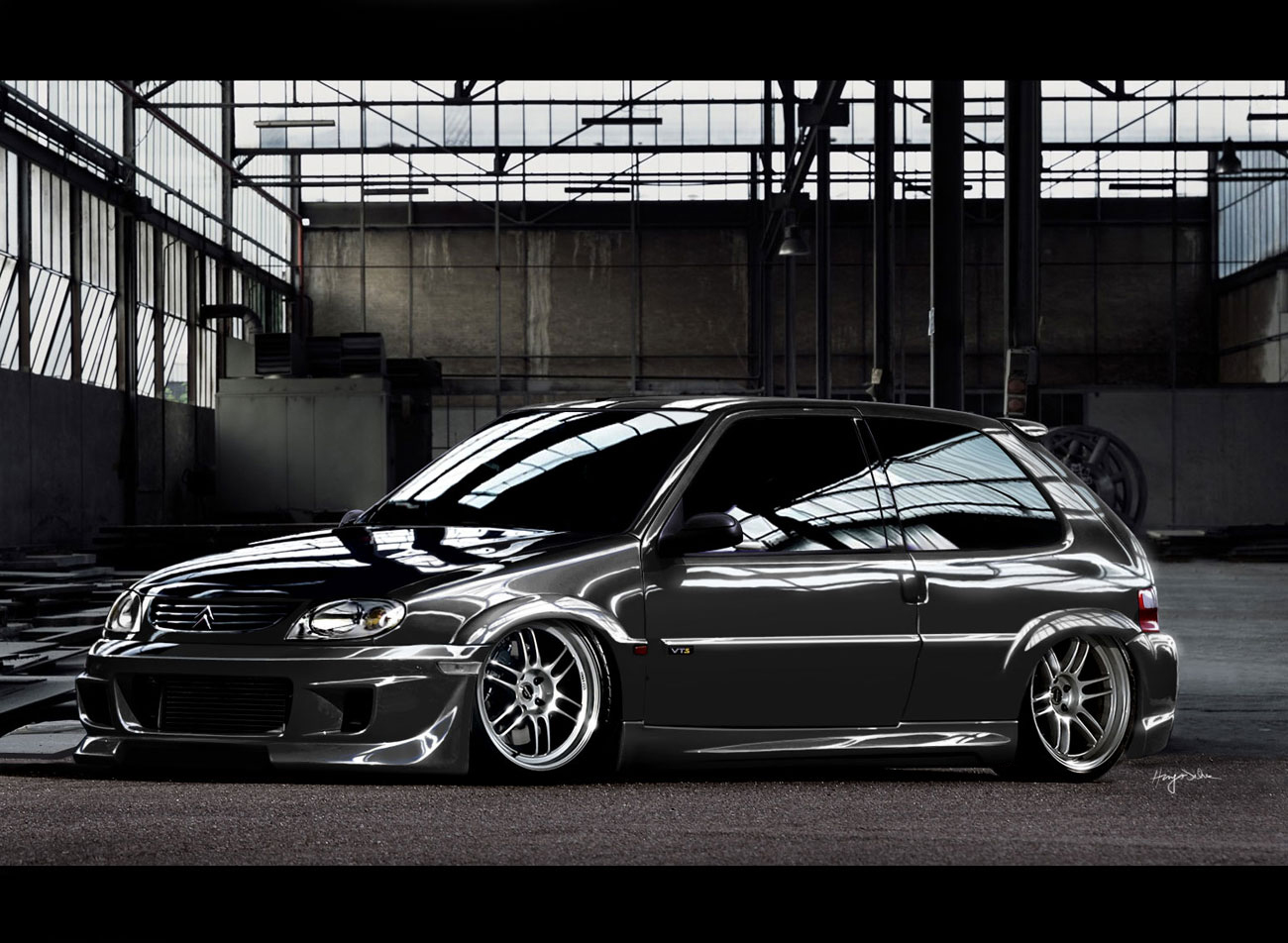 The Citroen Saxo is a supermini produced by the French manufacturer Citroën (PSA) from 1996 to 2003. It was also sold in Japan as the Citroën Chanson. It shares many engine and body parts with the Peugeot 106 (which itself was a development of the Citroën AX), the major difference being interiors and body panels. It was replaced by the Citroën C2 in the autumn of 2003. All engines were from the PSA TU engine series that powered the Peugeot 205 from 1988 and the Citroën AX, and had their roots before that with the OHC PSA X engine various other PSA cars used, such as the Citroën Visa, Peugeot 104 and early Peugeot 205. The range included five petrol engines and one diesel engine, all naturally aspirated.
 Although the power outputs seem low in modern terms, even the range-topping VTS had a kerb weight of just 965 kg (2,127 lb), giving all models quite a 'nippy' feel around town. The 1.0 was quite underpowered, the 1.1 was much better, since it was nearly 200 cc larger, and had roughly 30% more torque.There were 3 sport models of the Saxo:
 These models included 247 mm (9.7 in) vented front brake discs, with the VTR and VTS also having rear brake discs (solid 247 mm (9.7 in) discs). Also, a different style of control arms and struts was used for the suspension. The VTS had a 22 mm (0.9 in) master brake cylinder, and the VTR and Westcoast/Furio had a 19 mm (0.7 in). The VTS had a 19 mm (0.7 in) front anti-roll bar and 22 mm (0.9 in) rear anti-roll bar, while the VTR and Westcoast/Furio had a 19 mm (0.7 in) front and 21 mm (0.8 in) or sometimes 19 mm (0.7 in) rear anti-roll bar.
 In addition, all the sports models featured a different bodykit to the other models, commonly known as the "VT" bodykit. In 1997 the Saxo's 3 Speed Automatic Gearbox was combined with the 1.6i 8V 88 kW (90PS/89BHP) engine which was available on the Saxo SX and VSX. Then, in late 1997, the 1.6i automatic was replaced with a 1.4i 55 kW (75PS/74BHP) engine. The 1.6i was more powerful with a top speed of 176 km/h (109MPH) compared with the 1.4's top speed of 103 mph (166 km/h). Citroën carried on using the 1.4i engine on the Facelift Saxo Automatic in 1999. Due to the C3 having a 1.4i Automatic Gear Box the Saxo Automatic came to an end in March 2002, whilst the manual models were still sold right up to the end of 2003.
 The equipment list was generally sparse, with budget models having drivers air bag, seat belt pre-tensioners, cassette player, heated rear screen and tinted windows, and early mk1's with keypad immobilisers and a clock in place of a tachometer and 3 stud wheels, much like the AX. Further up the list sunroofs, PAS, Electric windows, ultrasonic alarm, passenger airbag, CD player, tachometer, front fog lights, bodykits, colour coded mirror caps and alloy wheels were added, to name a few. The 1.6L VTR and VTS Saxo's were the best equipped, with both gaining rear disc brakes as opposed to drum brakes, and ABS as an optional extra on the VTR and standard on the VTS.
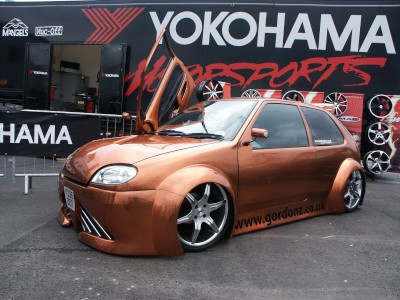 The Saxo received a style makeover at the start of the year 2000, commonly branded as a MK2, with the major differences being more modern styled headlights, bonnets and grilles to replace the square style on the MK1 and Multipoint injection replacing the single point on the 1.1L engines. PAS became standard on all but the very basic models. More subtle changes were alterations to the rear lights (the indicator sections are more "white") and the engine control unit moved from a single plug to 3 plugs. The old 3 stud wheel layout was also dropped. There was also a minor facelift during the MK1 phase of the cars production in line with the then current releases by Citroen, moving towards a rounder look.
 Few special models were released throughout the Saxo's life, most notably the "Open Scandal", a Saxo with a full length sliding canvas roof. Other special editions added certain extra's to the lower end model, such as sunroofs or PAS. Notable models are the Westcoast up to 1999 and the Furio to 2003, as they incorporated the standard Saxo bodykit found on the VTR and VTS with a more insurance friendly 1.4L engine. Air-conditioning was never an option on right-hand-drive Saxo's because the blower motor was mounted in the bulk-head on the drivers side. As a result, there was insufficient space available to accommodate the evaporator, except by first ducting the air flow to the passenger side and then at the expense of the glove-box. Although an after-market kit was available that did exactly this, the resultant pressure loss made the system noisy and ineffective. The blower motor could also not be easily relocated, since the windscreen wiper motor was mounted in the passenger side space.
 The Citroen Saxo (as well as the Peugeot 106) was and still is a favourite for young drivers who have just passed their test as a first car due to low insurance (except vts version), low running costs and they are very cheap to buy. When new, the Saxo came with low finance and free insurance deals for young drivers which helped to boost its appeal to younger drivers. The Saxo is a car modifiers favourite due to this appeal with several body styling and tuning options (more so for vtr and vts versions) available with some people spending thousands of pounds on their cars. Top Gear presenter Jeremy Clarkson once visited a cruise with the Saxo's replacement - the Citroen C2 - to find out if the C2 had the same modifying potential as the Saxo.
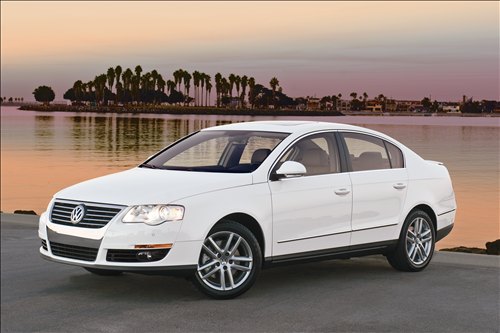 The Volkswagen Passat is a large family car built by Volkswagen Passenger Cars through six design generations since 1973. Slotting between the Volkswagen Golf / Volkswagen Jetta, and the Volkswagen Phaeton in the current Volkswagen line-up, the Passat and its derivatives have been badged variously as Dasher, Santana, Quantum, Magotan, Corsar and Carat. In 2008, Volkswagen extended its range with the launch of the Passat CC, a "4-door coupé" version of the Passat. The Passat was placed in the middle of the sedan/saloon market segment at its introduction in 1973. Sales of the aging Beetle were declining and larger air-cooled rear-engined models like the Volkswagen Type 3 and 411 and 412 were based on older technology.
 Following the Volkswagen Group's acquisition of Audi in 1964, Volkswagen used new engineering expertise to develop a modern front-wheel drive car with a water-cooled engine, and thus the Passat and Golf (the latter being introduced in 1974) were the first of a new generation of Volkswagen cars. The first Passat was developed partly from the Audi 80/Fox and, until 2005, the two shared a history. During its development phase, the Passat was designated internally as EA400 (Entwicklungsauftrag 400, or "Development Order 400"), and well before its launch, production of the Volkswagen Type 3 at the Wolfsburg plant had been stopped in order to free up capacity for the new car. Wolfsburg was able to ramp up production carefully: directly before Passat production started the lines were used to assemble small volumes of the car's Audi 80 sibling which had been launched a year earlier. The nameplate Passat derives from the German word for tradewind — and the period in its history when Volkswagen named vehicles after prominent winds, including also Golf (after the Gulf stream, Jetta (after Jet stream), and Scirocco (after Sirocco).
 The original Volkswagen Passat was launched in 1973. The body types offered originally were 2- and 4-door sedans and similar looking three- and five-door versions. Externally all four shared a modern fastback style design, styled by the Italian designer Giorgetto Giugiaro. In essence, the first Passat was a fastback version of the mechanically identical Audi 80 sedan, introduced a year earlier. A five-door station wagon/estate was introduced in 1974. In Europe, the Passat was equipped with 2 rectangular, 2 round 7", or 4 round 5.5" headlights depending on specification. The Passat was one of the most modern European family cars at the time, and was intended as a replacement for the aging Volkswagen Type 3 and Type 4. The Passat was Wheels magazine's Car of the Year for 1974 and its sister model Audi 80 was nominated car of the year by the European motor press a year earlier. The platform was named B1.
 The Passat originally used the 4 cylinder OHC 1.3 l (55 PS (40 kW; 54 hp)) and 1.5 l (75 PS (55 kW; 74 hp)/85 PS (63 kW; 84 hp)) petrol engines also used in the Audi 80—longitudinally mounted with front-wheel drive, in Audi tradition, with either a 4-speed manual transmission or 3-speed automatic. It had a MacPherson strut front suspension with a solid axle/coil spring setup at the rear. The SOHC 1.5 was enlarged to 1.6 l in August 1975 with unchanged power ratings and slightly higher torque ratings. In July 1978 the Passat Diesel became available, equipped with the VW Golf`s 1.5 l Diesel (50 PS (37 kW; 49 hp)), followed in February 1979 by the Passat GLI with a fuel-injected version of the 1.6 l engine. The whole range received a facelift in 1977 (launched 1978 outside Europe), featuring an interior upgrade and subtly revised styling including repositioned indicators and depending on model, either 4 round or 2 rectangular headlights.
 In North America, the car was called the Volkswagen Dasher. The three- and five-door hatchback and a station wagon model were launched in North America for and during the 1974 model year. Sole available engine was a carburetted 1.5 l inline-four developing 75 hp (56 kW) (or 70 hp (52 kW) in 1975), supplanted from model year 1976 by a Bosch fuel-injected 1.6 l four 78 hp (58 kW). North American cars were equipped with single DOT standard headlights. In 1978 the Dasher received a facelift along the lines of the European Passat, with quad sealed beam headlights and big polyurethane covered bumpers. The trim was also upgraded and the ride softened. 1979 saw the introduction of the 1.5 l diesel engine, which produced just 48 PS (35 kW) in the 1130 kg (2500 lb) car. 0–100 km/h time for the Diesel was 19.4 seconds, 6.2 seconds slower than the gasoline (petrol) engine. All gasoline engines were dropped for North America in 1981 in preparation for the next generation.
 The second generation Volkswagen Passat was launched in 1981. The platform, named B2, was slightly longer and the car's updated styling was instantly recognisable as a Passat, with the most obvious difference being the rectangular headlights. In addition to the Passat hatchbacks and Variants (estate/wagon), there was also a conventional three-box saloon, which until the 1985 facelift was sold as the Volkswagen Santana in Europe. In North America, the Passat/Santana was sold as the Volkswagen Quantum, available in three-door hatchback, four-door sedan, and a wagon model, but the five-door hatchback was never sold there and the three-door hatchback was dropped after less than two years. The four-wheel drive Syncro version was introduced in October 1984, initially only with the more powerful 5-cylinder engine. The Santana was also produced in China, Brazil, Mexico (as the Corsar, from 1984 and 1988) and Argentina (as the Carat between 1987 and 1991). In Brazil, the Santana station wagon was sold as the Quantum. The Passat saloon and estate were produced in South Africa for their local market until 1987. As of 2010[update] the B2 Santana is still in production in China.
 Like the previous generation, the B2 Passat was mainly sold with 4-cylinder petrol and diesel engines. Unlike its predecessor, however, top-of the line versions received 5 cylinder Audi or VW engines of 1.9–2.2 litres. In addition to four- and five-speed manuals and three-speed automatic gearboxes, the Passat/Santana was also available with the VW concern's interesting 4+E transmission. This, also called the "Formel E" had a particularly high top gear, which combined with a freewheeling mechanism to provide better gas mileage. An automatic stop/start was also available in some markets. The four-wheel drive system used in the Passat Variant Syncro shared the mechanics of the Audi 80 quattro and not the Volkswagen Golf Syncro. The Syncro's bottomplate was almost entirely different, requiring a transmission tunnel, a relocated gas tank and no spare tire well (to make room for the complex rear axle assembly). Only the more popular estate was reengineered. Syncro was also available in the North American market, only with the 5 cylinder engine.
 In 1985 the range received a slight facelift, consisting of new, larger bumpers, interior retouches, a new front grille and new taillights on the hatchback versions. The 2-door hatchback was discontinued while the Santana nameplate was dropped in Europe. The saloon's front end was now the same as the hatchback and estate. The North American version, still known as the Quantum, gained European-style composite headlamps. On March 31, 1988 production ended (although Syncro models continued in production until June) with 3,345,248 built in Germany. World production totals
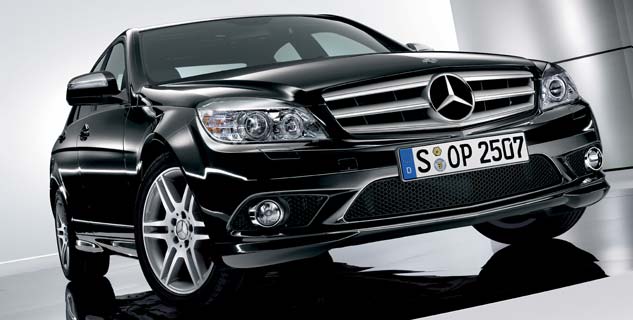 The Mercedes-Benz C-Class is a compact executive car produced by the Mercedes-Benz division of Daimler AG. First introduced in 1993 as a replacement for the 190 range, the C-Class was nicknamed the "Baby Benz" as it was the smallest model in the marque's lineup until the 1997 arrival of the A-Class. The C-Class is built at Mercedes-Benz factories in Sindelfingen and Bremen, Germany, in Santiago Tianguistenco, Mexico by Mercedes-Benz-Xicotencatl as well as in Mercedes's factories in Brazil and DaimlerChrysler's South African factory in East London. The very first W202 C-Class sedan was produced on June 1, 1993, and the second generation W203 C-Class rolled off the assembly line on July 18, 2000. The third generation W204 C-Class was launched in 2007. The C-Class is the entry-level offering in Mercedes-Benz's United States lineup. The C-Class platform has been used for several coupes, including the CLC-Class (and its predecessor, the C-Class Sportcoupe) and the E-class Coupe (and its predecessor, the CLK-Class).
 At the launch all W202 variants were equipped with a 5-speed manual gearbox. The 722.4 4-speed automatic transmission, also called 4G-TRONIC, was available as extra cost (standard on the C 36 AMG). In 1996 this old transmission - which was on sale since 1981 - was replaced by a 5-speed automatic gearbox (aka 722.5 or 5G-TRONIC), which received the manual shifting in 1999 (722.6). In 2000 the T-Modell, the only still on sale, was equipped with the G56 6-speed manual transmission. At the launch the C-Class had a standard driver airbag, ABS and integrated side-impact protection; the front passenger airbag became standard from 1995 onwards, and from the same period Traction control (ETS in the 4-cylinder models, combined with limited slip differential (ASD) or ASR in the 6 cylinders models) was available as extra cost. In 1997 ASR became standard in the C 280s equipped with the automatic transmission and in the C 36 AMG, as ETS in the 4-cylinder models, except for the C 180 and the C 220 Diesel. With the 1997 restyling ASR became standard in all the models, except in the C 180 and C 220 Diesel. This last model continued to offer ETS available as extra cost. Moreover front side airbags and Brake assist (BAS) came in the list of standard safety features. The two basic models finally joined ASR in 1998, and, in 1999, the W202 was the first mid-size sedan to offer ESP as standard in all the range.
 On its debut, the C-Class was the only Mercedes model with a complete lineup of multi-valve engines. The new family of four cylinder petrol units, called M111, debuted in the C 180 (1.8 L, 122 PS (90 kW; 120 hp)), C 200 (2.0 L, 136 PS (100 kW; 134 hp) and C 220 (2.2 L, 150 PS (110 kW; 148 hp), the only four cylinder of the range sold in the U.S.). In 1996 the C 220 was replaced by the C 230, enlarged to 2.3 L displacement but with the same output, although with torque increased to 220 N·m (162 lb·ft). The C 280 was the high end model of the class, with a four-valve-per-cylinder straight-6 engine, capable of reaching 193 PS (142 kW; 190 hp). Four-cylinder diesel models were equipped with the same OM601 engine of the 190, in the 2.0 L and 2.2 L versions. Many of these diesel variants were sold as taxis, due to their low fuel consumption and strong reliability. There were also more powerful OM605 five cylinder engines which were available in naturally aspired (C 250 D) and turbocharged (C 250 TD) forms. The turbodiesel was introduced in 1995 and is one of the novelties in the engine range available from this year. The most important was a supercharged version of the M111 straight four, the C 230 Kompressor, using a Roots-type supercharger to generate 193 PS (142 kW; 190 hp) at 5300 rpm: Mercedes-Benz reused supercharger technology after 50 years. Due to the tax law in Italy and Portugal, models in those countries featured a supercharged version of the smaller 2.0 L (C 200 Kompressor), which had a similar output of the C 230 Kompressor. With the restyling in 1997, a lot of things changed under the hood of the Baby Benz. The most important innovation was the OM611, equipped with a common rail direct injection system (co-developed with Bosch). The new model was named C 220 CDI, and had an improvement in output of 30 PS (22 kW; 30 hp) compared with the C 220 Diesel, better fuel average and lower emissions. Another revolution occurred to the six cylinder engines, as the legendary straight six were replaced by an all new family of V6, the M112. The new engines featured SOHC heads instead of the previous DOHC, three valves per cylinder instead of four, and twin sparkplugs. The four-cylinder C 230 was replaced by the C 240 (2.4 L) and the I6 C 280 by the V6 C 280. These changes theoretically reduced emissions, and improved fuel consumption, without sacrificing power (the C 280 in (7,112 mm) fact had a slight 4 PS (3 kW; 4 hp) increase with the change). In the last four years of production, the W202 received a few changes in the choices of engine. In 1998, a less powerful version of the 2.2 L turbodiesel was added, called C 200 CDI, which replaced the C 220 Diesel. In 2000, the C 200 Kompressor T's output was cut to 163 PS (120 kW; 161 hp), the C 240 T displacement was enlarged from 2.4 L to 2.6 L, but output remained at 170 PS (130 kW; 170 hp) and the C 180 got a 2.0 L engine.


© 2011 TOPS WALLPAPERS


